EFT: Repair of Tripping Hazard for Town of Westford, MA
The Challenge
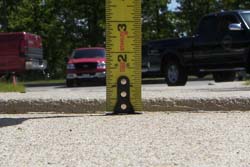
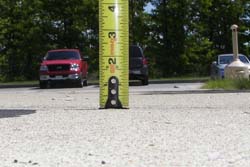
A frost-heaved concrete slab at the main entrance of the Westford Highway Department created a significant tripping hazard and liability concern for the Town. One section of the walkway had lifted nearly an inch during the winter months and failed to settle back in the spring, leaving an uneven walking surface directly in a high-traffic pedestrian area. Because the hazard was unavoidable for visitors and staff entering the building, the condition posed both a safety risk and an immediate exposure to potential injury claims.
Project Considerations
A conventional “rip and replace” repair would have required demolition of the existing slab and placement of new concrete, resulting in prolonged construction time, restricted access, and disruption to the facility’s primary entrance. Maintaining uninterrupted building access was a critical requirement, as the Highway Department needed to remain fully operational throughout the repair process. The Town also sought a cost-effective solution that minimized downtime while delivering a durable, long-term fix.
Our Solution
EFT performed traditional slabjacking to correct the uneven concrete without removing or replacing the slab. Portable grouting equipment was mobilized on site, including a specialty mixer and grout pump designed for precision lifting. Small injection holes were drilled into the adjacent slab, and a controlled grout mixture was pumped beneath the concrete to raise it evenly until it met the heaved section. The process restored a smooth, level walking surface while preserving the existing concrete and surrounding infrastructure.
Results & Benefits
The tripping hazard was eliminated in under an hour, with minimal impact to pedestrian access and no interruption to facility operations. Cleanup was completed within minutes, allowing the entrance to be safely reopened immediately. By choosing slabjacking over full replacement, the Town of Westford achieved a faster repair timeline, reduced overall costs, and avoided the extended disruption typically associated with concrete demolition and reconstruction.